KNOB AND TUBE WIRING Knob-and-tube (K&T) wiring was an early standardized method of electrical wiring in buildings and homes, in North America from about 1880 to the 1940’s. Knob & tube wiring is considered obsolete and can be a safety hazard, although some of the fear associated with it is undeserved. Facts About Knob-and-Tube Wiring:
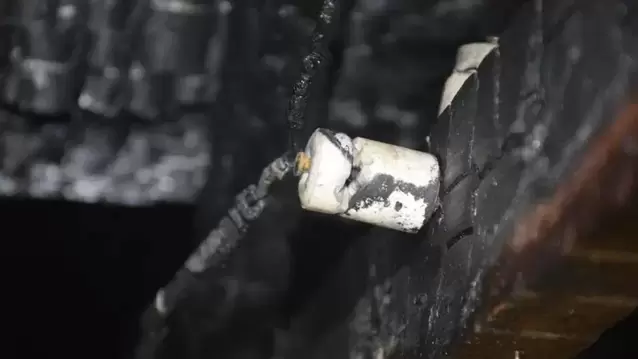
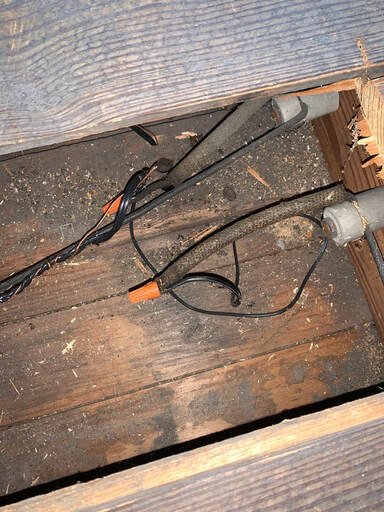
K&T wiring consists of insulated copper conductors passing through lumber framing drill-holes via protective porcelain insulating tubes. They are supported along their length by nailed-down porcelain knobs. Where wires enter a wiring device, such as a lamp or switch, or were pulled into a wall, they are protected by flexible cloth or rubber insulation called "loom." Advantages of Knob-and-Tube Wiring:
K&T wiring is often spliced with modern wiring incorrectly by amateurs. This is perhaps due to the ease by which K&T wiring is accessed. Building Insulation: K&T wiring is designed to dissipate heat into free air, and insulation will disturb this process. Insulation around K&T wires will cause heat to build up, and this creates a fire hazard. Local jurisdictions may or may not adopt the NEC’s requirement. Modifications: When K&T wiring was first introduced, common household electrical appliances were limited to little more than toasters, tea kettles, coffee percolators and clothes irons. The electrical requirements of mid- to late-20th century homes could not have been foreseen during the late 18th century, a time during which electricity, to many, was seen as a passing fad. Existing K&T systems are notorious for modifications made in an attempt to match the increasing amperage loads required by a plethora of modern electric appliances. Many of these attempts were made by insufficiently trained handymen, rather than experienced electricians, whose work made the wiring system vulnerable to overloading.
Many insurance companies refuse to insure houses that have knob-and-tube wiring due to the risk of fire. Exceptions are sometimes made for houses where an electrical contractor has deemed the system to be safe. Advice for those with K&T wiring:
0 Comments
Your comment will be posted after it is approved.
Leave a Reply. |
Categories
All
Archives |