|
ICE DAMS
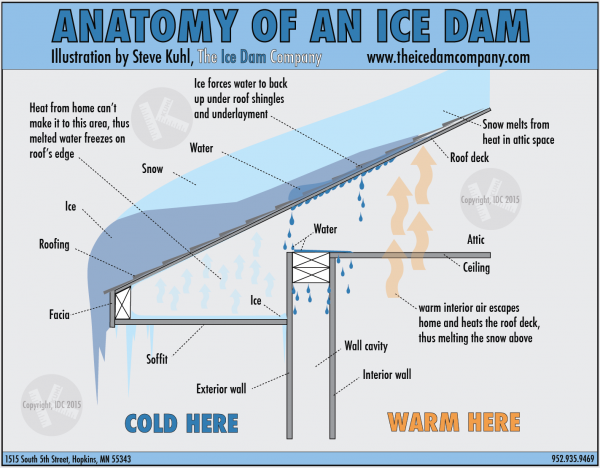
An ice dam is a ridge of ice that forms at the edge of a roof and prevents melting snow from draining. As water backs up behind the dam, it can leak through the roof and cause damage to walls, ceilings, insulation and other areas. How are ice dams formed? Ice dams are formed by an interaction between snow cover, outside temperatures, and heat lost through the roof. Specifically, there must be snow on the roof, warm portions of the upper roof (warmer than 32° F), and cold portions of the lower roof (at freezing or below). Melted snow from the warmer areas will refreeze when it flows down to the colder portions, forming an ice dam. Although the primary contributor to snow melting is heat loss from the building's interior, solar radiation can also provide sufficient heat to melt snow on a roof Gutters do not cause ice dams to form, contrary to popular belief. Gutters do, however, help concentrate ice from the dam in a vulnerable area, where parts of the house like fascia, can peel away under the weight of the ice and come crashing to the ground. Problems Associated with Ice Dams Ice dams are problematic because they force water to leak from the roof into interior areas. This may lead to:
Prevention
0 Comments
Your comment will be posted after it is approved.
Leave a Reply. |
Categories
All
Archives |