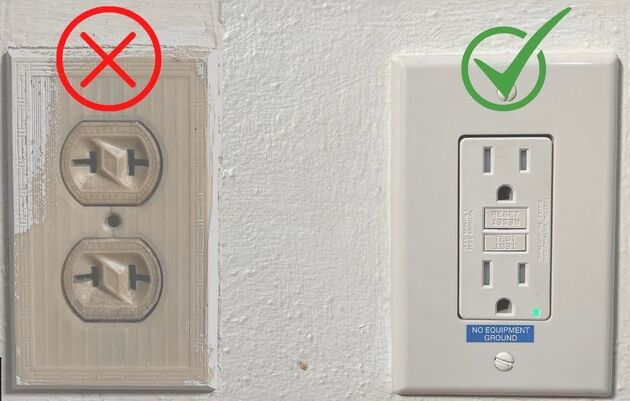
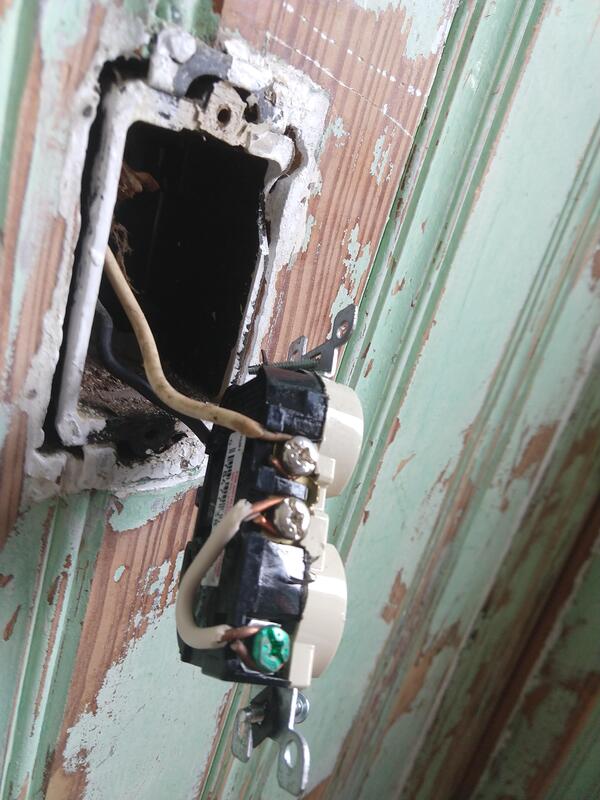
GFCI’s & UNGROUNDED OUTLETS Understanding your home’s electrical system is a very important part of homeownership. You need to know if your home is safe from electrical issues, damage, or death from electrocution. One of the many ways to ensure safety is by having GFCI breakers or GFCI receptacles in the home, as this will help protect you from ungrounded outlets. GFCI stands for Ground Fault Circuit Interrupter. These are specialized outlets that will shut off the flow of electricity when they sense a fault in the electrical ground. The electrical current in your homes wiring system consists of a flow of electrons within metal wires. The current comes in two forms, a negative and a positive charge, and this charged electrical field is created by huge generators operated by the utility company, sometimes many hundreds of miles away. It is this polarized charge that effectively constitutes the flow of electrical current, and it arrives at your home through a vast network of high-tension service wires, substations, and transformers that blanket the landscape. The physics of electrical flow is more complicated than most simple explanations can convey, but essentially, electricity seeks to return its electrons to "ground"—that is, to discharge its negative energy and return to equilibrium. Normally, the current returns to ground through the neutral wires in the electrical system. But should some breakdown of the pathway occur, the hot current may instead flow through other materials, metal pipes, or flammable materials in your home, or more importantly, you. This is what may happen in an electrical short, where most electrical fires and shocks originate. An electrical short is when electricity strays outside the wires that it is supposed to flow through—in other words, when it takes a shorter path, like through your body, to ground. What is Grounding and Why Is it Important? Grounding is essentially a system of bare copper wires that run parallel to the hot and neutral wires. It provides an alternate pathway for electrical current to follow should there be a breakdown in the system’s hot and neutral wires that normally carry the current. If a wire connection becomes loose, for example, or a rodent damages a wire, the grounding system channels the stray current back to ground by this alternate pathway before it can cause a fire or shock electrocution. GFCI’s and Protecting Ungrounded Outlets When a ground fault occurs, the GFCI senses a difference in incoming and outgoing current and quickly shuts off the power. These are safety devices built into certain outlets to protect against electrical shock. Making sure that every outlet is grounded by a ground wire is important, however, some older homes may have an older electrical system that doesn’t include grounding wires. This is where a GFCI can help. GFCI outlets can protect other outlets downstream that are on the same circuit. This includes any tools or appliances that are plugged into the GFCI outlets. Ground faults can occur by:
Will A GFCI Breaker Protect Ungrounded Outlets? A GFCI protected outlet or breaker can detect when more current is coming into the outlet on the hot wire than is exiting on the neutral wire. This shuts off the circuit quickly before the current can stray and cause shock or electrocution. The GFCI protected outlet or breaker does not create a path to the ground like modern day wiring. Only a connected ground wire can re-route the electrical current to the ground and save you from electrocution. GFCI protected outlets simply cut the electrical supply when needed, making the un-grounded outlet safer in a ground fault situation. Bootleg Ground – What Not to Do Even though it may be tempting, and someone who is not a professional may tell you it is okay, you want to stay away from bootleg grounding. This is where a jumper wire is installed on a receptacle, in between the neutral wire to the ground screw. The purpose is for the receptacle to look grounded but it doesn’t work and is illegal. Recommended Maintenance GFCI’s should be routinely tested by pushing the test button and then resetting the receptacle. It is not uncommon to find a GFCI that will not reset after being tripped. This could indicate a faulty receptacle and replacement should be performed by a licensed electrician. When Do I Call A Professional? Electrical fires are very dangerous and can destroy homes and life. If you have an old outdated electrical system or notice outlets that only have 2 slots you may have an ungrounded electrical system. It is in your best interest to contact a licensed electrician for further evaluation and an estimate on an electrical system upgrade. Conclusion Many people fail to inspect the outlets in their homes as most people are unaware this is needed. Outlets could become exposed to harsh temperatures or dampness or physical damage. In addition, adding appliances like a refrigerator or microwave onto ungrounded circuits is dangerous for everyone in the home. Safety should be the priority here. Having your home inspected once a year is a great idea. Often issues like these can be caught before they became major issues.
0 Comments
Your comment will be posted after it is approved.
Leave a Reply. |
Categories
All
Archives |